
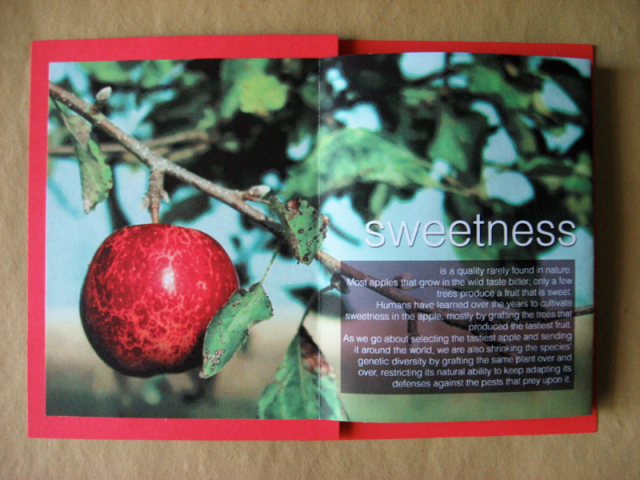
“Sweetness is a quality rarely found in nature. Most apples that grow in the wild taste bitter; only a few trees produce a fruit that is sweet. Humans have learned over the years to cultivate sweetness in the apple, mostly by grafting the trees that produced the tastiest fruit. As we go about selecting the tastiest apple and sending it around the world we are shrinking the species’ genetic diversity by grafting the same plant over and over, restricting its natural ability to keep adapting its defenses against the pests that prey upon it.”
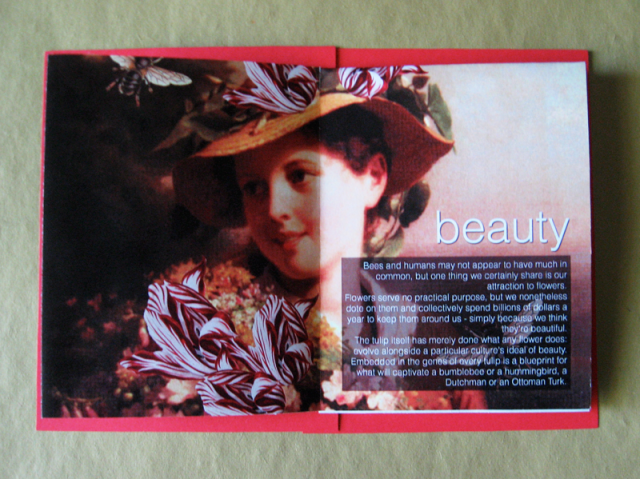
“Bees and humans may not appear to have much in common, but one thing we certainly share is our attraction to flowers. Flowers serve no practical purpose, but we nonetheless dote on them and collectively spend billions of dollars a year to keep them around us – simply because we think they’re beautiful. The tulip has merely done what any flower does: evolve alongside a particular culture’s ideal of beauty. Embedded in the genes of every tulip is a blueprint for what will captivate a bumblebee or hummingbird, a Dutchman or an Ottoman Turk.”
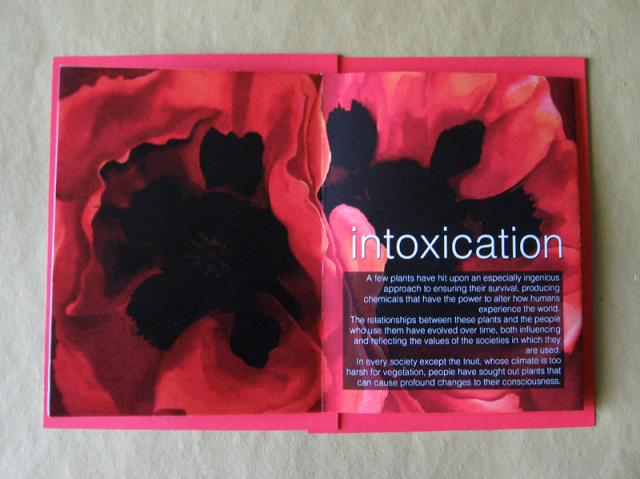
“A few plants have hit upon an especially ingenious approach to ensuring their survival, producing chemicals that have the power to alter how humans experience the world. The relationships between these plants and the people who use them have evolved over time, both influencing and reflecting the values of the societies in which they are used. In every society except the Inuit, whose climate is too harsh for vegetation, people have sought out plants that can cause profound changes to their consciousness.”
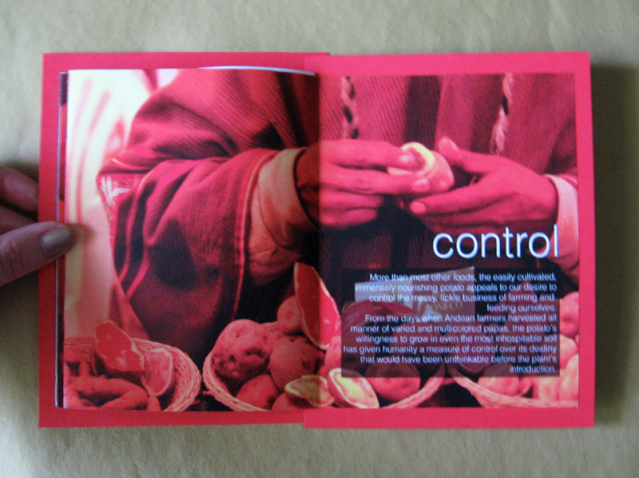
“More than most other foods, the easily cultivated, immensely nourishing potato appeals to our desire to control the messy, fickle business of farming and feeding ourselves. From the day when Andean farmers harvested all manner of varied and multicolored papas, the potato’s willingness to grow in even the most inhospitable soil has given humanity a measure of control over its destiny that would have been unthinkable before the plant’s introduction.”

No comments:
Post a Comment